A team of archaeologists have discovered what appears to be a barbecue pit at Montpelier, the home of President James Madison near Orange, Virginia. Barbecue has a long, rich history in Virginia, and there are quite a few connections with George Washington, who in his journals recorded attending many barbecues and even hosted a few of his owns. This establishes a connection with another American president.

Showing posts with label Blogger Shouts. Show all posts
Showing posts with label Blogger Shouts. Show all posts
Wednesday, November 30, 2011


Monday, June 20, 2011
Why Do We Tip (Redux)
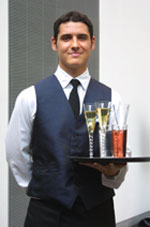 I'm a big fan of NPR's Planet Money Podcast. It's my go-to selection on my iPod while I'm cooking dinner. So, I listened with great interest this weekend when Planet Money delved into one of my long-standing favorite topics: why do we tip waiters in restaurants? I've weighed in on this subject on multiple occasions, including this hoary blog post from five years ago which lays out my general party line.
My opinions have not changed much in a half-decade, and I still continue to be bemused by how most people who delve into the subject of tipping look at it primarily from the customer's point of view (e.g. Steve Buscemi's Mr. Pink character in Reservoir Dogs) and not the waiter or restaurant owner's. Planet Money, though, does a pretty good job, I think, of looking at it from all angles, and their piece turns up a couple of interesting points.
First, they wonder why it is that, even though so many people express frustration at tipping, we still do it: "How do you undo five hundred years of custom and expectation? . . . No one wants to be the first guy who starts stiffing all the waiters because they feel like tipping is illogical." As I go into in more depth in my old post on tipping, I think this is primarily because the real decision-making power on the topic is in the hands of the waiters and restaurant owners, not the customers.
We can see that in cases of other occupations that over the course of a decade or two have transitioned away from a tip-based compensation scheme. Take grocery store bag boys, for example. Interestingly enough, the Planet Money commentators ask during their piece how come we don't feel compelled to tip workers in grocery stores. Perhaps they are a little younger than me, but when I was a teenager you always tipped the bag boys in grocery stores who took your bags out to your car for you, as my high school friends who worked as bag boys were prone to discuss ad infinitum. These days, that custom is all but extinct (as is, I suppose, the term "bag boy").
And how did it happen? In many of the grocery stores I frequented it was due to an active decision and campaign on behalf of the store's management, who posted big signs on the wall saying something to the effect of, "Carrying your bags out to the car is a service we perform free of charge. Please, no tipping." After a few years, everyone began feeling comfortable not tipping that nice kid who helped with the cart, and these days I not only don't recall anyone tipping bagboys anymore but I don't even remember seeing those signs saying "please don't tip".
I'd be curious to hear from someone who was behind those management decisions why it was they decided to actively discourage tipping, but I bet it was because as the economy changed they found that they could attract better employees if they offered them a more fixed, reliable wage.
But that still leaves unaddressed the question of why tipping persists in the restaurant industry when it's on the outs in supermarkets.
That's where the second interesting point from the Planet Money piece comes in. During their interviews, the reporters found that when they asked waiters and waitresses if they would trade making the same money guaranteed through a fixed service charge rather than through tips, the answer was almost always no. And why? "They like it. They like the excitement, and for every bad tip there's a good one around the corner."
And why is that? I think it's because, as I said in my original post on the topic, "Waiting tables is very much a customer-facing sales position, and any waiter who has figured out how to upsell tables with appetizers and drink specials understands that tipping is essentially a slightly-unstable commission system."
And that optimistic willingness to forgo the guaranteed moderate income in favor of the uncertain upside chance for a really big score is a characteristic I've seen in all sorts of salespeople, from the waiters and waitresses hoping to move a little extra liquor and charm a few extra percentage points out of a check to the high-end software sales guys angling to land a six-figure commission on an enterprise deal.
And I still don't think tipping in restaurants is going anywhere anytime soon.
Sunday, January 16, 2011
A Shrinking South?

Historians and linguists agree that the northern boundary of the South has moved somewhere down around Richmond which, perhaps not coincidentally, is where researchers have also drawn the "sweet tea line", a demarcation of where restaurants stop offering sweet tea to customers. (Though, it seems, McDonald's is now doing what it can to break down this barrier by offering sweet tea nationwide.)
It is a curious evolution, for though Virginia still maintains its long, rich tradition of Southern country hams, its once-famed barbecue culture (as I've discussed before) has long since faded into obscurity.
I, however, am not one to despair, for I contend whole heartedly that the state of Florida--which most commentators routinely write off as not Southern at all--is in fact one of the most Southern states we have. Anyone who doubts that fact should try barbecue at Shorty's in Miami or Bono's in Jacksonville, Florida, or spend a football weekend in Tallahassee. Or, pick up Diane Roberts's splendid book Dream State: Eight Generations of Swamp Lawyers, Conquistadors, Confederate Daughters, Banana Republicans, and Other Florida Wildlife
 , which I am about midway through reading and recommend highly for anyone who wants to get a feel for both the history and contemporary reality of the state of Florida. Or, for that matter, just to have a rip-roaring good laugh, for she is wickedly funny.
If everyone out there would just agree with my contention, then we'd pick up Florida right off the bat and that would more than offset any geography lost by the defection of northern Virginia.
And, anyway, the rumors of the demise of the Southernness of Virginia may be greatly exaggerated to begin with. What better to trust than the food we eat? Safeway grocery stores, the Post reports, says that the group of its stores located between Culpeper, Virginia, and Frederick, Maryland, "posts the company's biggest sales of such regional offerings as fried chicken, ham hocks and other 'country meats,' collard greens and sweet potatoes."
So I say the jury is still out.
Thursday, January 06, 2011
Planter's Punch: the History--In Verse

It is often claimed that Planter's Punch was created right here in Charleston. The potent concoction of rum, sugar, and citrus was the specialty of the house at the Planters Hotel in the 19th century, and it went on from there to gain national fame. Or so the story goes. Unfortunately, it's not true.
The Planters Hotel was indeed a famous antebellum establishment. It opened in 1809, when Alexander Calder converted the old Dock Street Theatre into a hotel, and it became the favorite resort for rice planters when they came into the city for the winter. The hotel was well known for its imbibing clientèle: a British visitor who stayed there in the 1830s noted that during dinner "very little wine is drank, and rather too much brandy." But there's not a shred of evidence that its bar ever served a beverage called Planter's Punch. That association seems to have been made in recent years based solely on the name of the hotel itself.
See the City Paper for the whole story.
I managed to turn up not just a couple of old Planter's Punch recipes but old recipes in verse!
Saturday, November 06, 2010
Oh My Goodness . . .

Yes, it's just what the picture looks like: a cheeseburger made with two Krispy Kreme doughnuts as the bun. Dubbed "The Luther", this, in my book, shoves the Double Down on the playground and rubs its face in the dirt.
Apparently, this monstrosity has been around for a few years, but, since I don't hang around too many State Fairs, it's a new one to me. Check out it and all the other fair food pics in the City Paper piece: they've got about thirty doozies that will either make you really really hungry or turn you into a vegetarian.
Wednesday, October 13, 2010
Lake Trout: Who Knew?

Part of the reason is that the show captures the city of Baltimore in the way that no one has captured a city since Raymond Chandler portrayed L.A. in the 1930s, 40s, and 50s. There's a throw-away line somewhere in season 3 or 4 where someone mentions "lake trout" and notes that it's neither a trout nor from a lake.
And I had no idea what they were talking about until I saw John T. Edge's United Tastes piece on it in the New York Times. As it turns out, Atlantic whiting is the most commonly used fish for "lake trout". It's a great piece, and makes me want to learn more about Baltimore. A fascinating city.
Saturday, October 09, 2010
Chicagoans Invade the South on BBQ Road Trip
Kevin Pang and Keith Claxton, two guys from the Chicago Tribune, are off on a barbecue road trip through the South. Day 1 took them from Chicago all the way to Nashville, then Day 2 and 3 across the state of North Carolina, where they hit such notable spots as the Barbecue Center and Lexington Barbecue in Lexington, Richard's in Salisbury, Allen & Son in Chapel Hill, the Pit in Raleigh, the Skylight Inn in Ayden, and Wilber's in Goldsboro. That's one hell of a two day winning streak.
Day 5 took them through South Carolina where, I must say, from a purely barbecue perspective, they squandered all their time in Columbia instead of getting off I-20 and heading to Hemingway and Gadsden. Day 6 was a dash through Atlanta all the way to New Orleans, where they are apparently now off on a raw oyster detour.
One of the more interesting things is their coverage of a stop at the improbably-named J.J. McBrewster's in Lexington, Kentucky, where the staff was resting up and bracing up for the broadcast of their appearance on Guy Fieri's cloying Food Network show "Diners, Drive-Ins, and Dives." The interesting part is what an appearance on "the Triple D", as it apparently is called, can do for an otherwise out-of-the-way strip mall restaurant: 3 hour waits, apparently, are par for the course. Go figure.
The road trip's good stuff, and you can follow it here: http://bbqroadtrip.tumblr.com/.
Day 5 took them through South Carolina where, I must say, from a purely barbecue perspective, they squandered all their time in Columbia instead of getting off I-20 and heading to Hemingway and Gadsden. Day 6 was a dash through Atlanta all the way to New Orleans, where they are apparently now off on a raw oyster detour.
One of the more interesting things is their coverage of a stop at the improbably-named J.J. McBrewster's in Lexington, Kentucky, where the staff was resting up and bracing up for the broadcast of their appearance on Guy Fieri's cloying Food Network show "Diners, Drive-Ins, and Dives." The interesting part is what an appearance on "the Triple D", as it apparently is called, can do for an otherwise out-of-the-way strip mall restaurant: 3 hour waits, apparently, are par for the course. Go figure.
The road trip's good stuff, and you can follow it here: http://bbqroadtrip.tumblr.com/.
Tuesday, September 28, 2010
BBQ Sundae Part 3: The Trend Continues
A few months ago I noted the rise of the barbecue sundae, the newest new-fangled way to make barbecue portable.
Now, the good folks over at Thursday Night Smackdown report finding the perfect accompaniment for your BBQ sundae at the Hamilton Park BBQ Festival: banana pudding in a jar!
Now, the good folks over at Thursday Night Smackdown report finding the perfect accompaniment for your BBQ sundae at the Hamilton Park BBQ Festival: banana pudding in a jar!
Sunday, September 12, 2010
Newbie from L.A. Discovers Charleston Cuisine
Jessica Garrison of the Los Angeles Times gives a starry-eyed account of her Charleston restaurant tour. She admits that before this trip, she had not "spent even five minutes in the South," so it's a fun snapshot of a diner's first introduction to Lowcountry culinary delights.
Edisto's Po Pigs Bo-B-Q (yes, that is spelled correctly, after owner Bobo Lee) gets a glowing mention, as does dinner at FIG and brunch at Hominy Grill. If you had to pick just three spots for lunch, dinner, and breakfast, those are pretty good choices. (And, such continued publicity will do nothing to help reduce the ever-growing line of tourists on the Rutledge Avenue sidewalk on Saturday morning.)
I have to call foul on just one thing, though: the narrative hook that opens of the story: "Our waiter was staring at us in disbelief," Garrison writes. "Finally, he leaned forward and, ever so politely, asked my husband to repeat himself." The husband, it turns out, was inquiring of his waiter at FIG where they might go next to try more Charleston culinary specialties, after the couple had just finished three appetizers, a soup and two main courses.
Now, either it was the waiter's first week on the job, or maybe he just couldn't hear the husband the first time. Asking where to go next is just par for the course when you're trying to cram in a full week of dining in a single weekend in Charleston, and I can't imagine any seasoned downtown waiter being phased by such an eminently reasonable request. (I would have advised McCrady's, by the way, for a post-prandial pre-Prohibition cocktail and a few of the bar snacks like pimento goat cheese or ham hock and jalapeno boiled peanuts. There's always room to squeeze in a few of those.)
Edisto's Po Pigs Bo-B-Q (yes, that is spelled correctly, after owner Bobo Lee) gets a glowing mention, as does dinner at FIG and brunch at Hominy Grill. If you had to pick just three spots for lunch, dinner, and breakfast, those are pretty good choices. (And, such continued publicity will do nothing to help reduce the ever-growing line of tourists on the Rutledge Avenue sidewalk on Saturday morning.)
I have to call foul on just one thing, though: the narrative hook that opens of the story: "Our waiter was staring at us in disbelief," Garrison writes. "Finally, he leaned forward and, ever so politely, asked my husband to repeat himself." The husband, it turns out, was inquiring of his waiter at FIG where they might go next to try more Charleston culinary specialties, after the couple had just finished three appetizers, a soup and two main courses.
Now, either it was the waiter's first week on the job, or maybe he just couldn't hear the husband the first time. Asking where to go next is just par for the course when you're trying to cram in a full week of dining in a single weekend in Charleston, and I can't imagine any seasoned downtown waiter being phased by such an eminently reasonable request. (I would have advised McCrady's, by the way, for a post-prandial pre-Prohibition cocktail and a few of the bar snacks like pimento goat cheese or ham hock and jalapeno boiled peanuts. There's always room to squeeze in a few of those.)
Friday, August 27, 2010
The Greying of America
The National Restaurant News reports that restaurant traffic is expected to slow as the Baby Boomer population ages. In related news, tips are expected to plummet and the "dinner rush" to shift to four to six p.m., and waiters and waitresses will hit the after-hours bars at 8:30 PM and blow their night's earnings by 10:00.
Monday, August 23, 2010
I told you so . . . again!
It does seem that I have remarkable predictive powers. Things just take longer than I expect to develop. More than two years ago I made a set of food prognostications that I revisit now and again. Upon my first review, I found most of them unfilled. Like this one:
Ah. The trends may move slowly, but they will come. Now Stephanie Barna of the City Paper reports some more underground supper clubs coming to light, Renata Dos Santos' LIME here in Charleston and another up in Charlotte. The later is sponsored by Patron tequila, and if going commercial isn't the sign of a trend about to go mainstream I don't know what is.
Just three months ago I was able to declare fulfilled my prediction of heirloom ingredients being adopted by fast-casual chains.
Just waiting now on the return of Le Grande Cuisine ...
Prediction:Young cooks will fire their publicists, mothball the chef's table, and take their names off their restaurant's web sites . . . Soon, America's leading chefs will not even have restaurants at all. They'll just show up randomly at various people's houses . . . and cook an unbelievable dinner for their surprised hosts.
Review: Okay, so I wasn't even remotely close on this one.GuerillaGuerrilla Cuisine is still going strong, but we haven't seen any imitators crop up. Unless, of course, I actually was right. How would we know about it if the chefs don't have publicists and websites . . . maybe it's actually going on right in our own neighborhoods. You just won't know about it until that knock comes at the door and in bustles a white-jacketed chef with obnoxious puffy patterned pants and a duffel bag full of battered cookware. So, split the middle and call it 5 points, since I MIGHT have been right on here.
Ah. The trends may move slowly, but they will come. Now Stephanie Barna of the City Paper reports some more underground supper clubs coming to light, Renata Dos Santos' LIME here in Charleston and another up in Charlotte. The later is sponsored by Patron tequila, and if going commercial isn't the sign of a trend about to go mainstream I don't know what is.
Just three months ago I was able to declare fulfilled my prediction of heirloom ingredients being adopted by fast-casual chains.
Just waiting now on the return of Le Grande Cuisine ...
Tuesday, August 17, 2010
What's Wrong With Mississippi BBQ
Good, detailed post on the history and current state of barbecue in Mississippi from NMissCommentator.
Sunday, August 15, 2010
The Fried Green Tomato Swindle, Part II: A Clarification

Since then, I've had great fun slipping passing references to fried green tomatoes not being Southern in other food pieces I've written, and a reader or two will almost invariably take the bait and comment that fried green tomatoes are indeed Southern because his or her grandmother was making them way back in the 1950s.
Lisa Bramen of the Smithsonian's Food and Think blog recently posted about fried green tomatoes and my they-ain't-Southern contention (thanks for the shout out, Lisa!), and if you read the comments on her post you'll see both the they-must-be-Southern-because-I-grew-up-eating-them line of thought as well as the contradictory point that people grew up in other places (California, Pennsylvania Dutch Country) eating fried green tomatoes, too.
So, it's probably time for a little clarification. I am not saying that no one in the South ate fried green tomatoes before the Fanny Flagg novel and its movie version came out. Clearly--as the frequent comments of Southerners who grew up eating them attest--Southerners did eat fried green tomatoes. The real point is that there's nothing particularly Southern about fried green tomatoes--or, at least, there wasn't until the movie spurred half the chefs below the Mason-Dixon line to add them to their menus. After all, I grew up in the South eating meatloaf and spaghetti with meat sauce about once a week each, but no one would claim those to be distinctively Southern dishes.
I think fried green tomatoes are interesting not so much because of their actual origin--there are many other now-stereotypically Southern foods that originated in similar ways--but rather because of the way a single movie was able to so strongly shape people's perceptions of a particular dish. It underscores the strong emotional and psychological elements inherent in our relationship with food. And, more than anything, it shows how fast-changing our food traditions are and how transitory regional foodways can be.
Thursday, August 12, 2010
Stickin' It to Slow Food
In Gastronomica, and now digested in the Utne Reader, Rachel Laudan sends a shot across the bow of slow food romanticists. She makes some very good points, but as the denouement and its qualified acceptance of the value of slow foodism indicates, she's sort of arguing against a straw man from the start. After all, I don't think the majority of modern foodies would actually argue that we should go back to the feudal era of peasantry.
The best point in the whole piece is that many of the things we think of as old, traditional foods are scarcely a century old. It's a fact that's not often commented upon: foodways change and evolve rapidly, and the way people eat in one generation is likely to be almost completely different from the way their great-grandparents ate. And that's not just a phenomenon of our era.
One of the points I make in my barbecue book is that what we really think of as classic old-school barbecue was basically established in the early 20th Century with the rise of the restaurant industry, which commercialized a dish that had been popular in American since the early colonial days. And, at the time barbecue restaurants were taking the country by storm, traditionalists were grumbling that it was a pale imitation of good old-fashioned barbecue, the kind they cooked over huge open pits dug in the ground back in the 19th century.
The historical food clock moves rather quickly, and, as Laudan persuasively argues, to try to turn it back to an idealized point in the past is bound to be a fool's errand.
The best point in the whole piece is that many of the things we think of as old, traditional foods are scarcely a century old. It's a fact that's not often commented upon: foodways change and evolve rapidly, and the way people eat in one generation is likely to be almost completely different from the way their great-grandparents ate. And that's not just a phenomenon of our era.
One of the points I make in my barbecue book
is that what we really think of as classic old-school barbecue was basically established in the early 20th Century with the rise of the restaurant industry, which commercialized a dish that had been popular in American since the early colonial days. And, at the time barbecue restaurants were taking the country by storm, traditionalists were grumbling that it was a pale imitation of good old-fashioned barbecue, the kind they cooked over huge open pits dug in the ground back in the 19th century.The historical food clock moves rather quickly, and, as Laudan persuasively argues, to try to turn it back to an idealized point in the past is bound to be a fool's errand.
Thursday, May 27, 2010
Bring on the Dukes
What the state of South Carolina needs is more barbecue places named Duke's. Thanks to Bryan Quinn, the son of Terry Quinn of Duke's Barbecue in Walterboro, soon we'll have another, this one out on Folly Rd.
The City Paper has the scoop here.
The City Paper has the scoop here.
Sunday, May 09, 2010
The Barbecue Sundae (Part 2)
The barbecue sundae concept seems to be spreading. Katie at Chaos in the Kitchen has posted her version, which adds the nice touch of jalapeno pickles. I also like the glass jar, which makes for a more appealing presentation than the styrofoam cup used by Outlaw Barbecue Shack.
One of the downfalls of barbecue as a take-out fast food item is that it's damn near impossible to eat while driving without causing serious damage to your clothing. Barbecue in a cup or a jar might be just the ticket.
A bit early to tell, but the barbecue sundae could be the next new new thing.
One of the downfalls of barbecue as a take-out fast food item is that it's damn near impossible to eat while driving without causing serious damage to your clothing. Barbecue in a cup or a jar might be just the ticket.
A bit early to tell, but the barbecue sundae could be the next new new thing.
Sunday, May 02, 2010
Model Children
So your kid made the honor roll or scored a goal for his soccer team. Big deal. Can he do this?
http://www.cnn.com/video/?/video/living/2010/02/12/antico.pizza.boy.cnn
hat tip to Savory Exposure.
http://www.cnn.com/video/?/video/living/2010/02/12/antico.pizza.boy.cnn
hat tip to Savory Exposure.
Thursday, April 22, 2010
Enter the Barbecue Sundae
When I first saw the headline I assumed Kathleen Purvis was talking about a barbecue sundae along the lines of the infamous chocolate-covered bacon sundaes that have been popping up across the country (like downtown in Charleston at Shine). As unexpectedly tasty as bacon is on a sundae, my first thought was "barbecue . . . on ice cream. That couldn't possibly work."
Turns out it's a better idea than that: beans, pork, and slaw in a handy to-go cup. That's the kind of barbecue innovation I can get behind.
Turns out it's a better idea than that: beans, pork, and slaw in a handy to-go cup. That's the kind of barbecue innovation I can get behind.
Wednesday, April 21, 2010
5 Things I'll Never, Ever Write About (Again. I Promise)
Jay at Hedonist Beer Jive dishes out a hilarious list of the "Five Most Boring Topics in Beer Journalism."
I might be guilty of #4 for yesterday's post on 7-11's "Game Day." But does it counts if you just think the big beer industry is silly and not evil?
I might be guilty of #4 for yesterday's post on 7-11's "Game Day." But does it counts if you just think the big beer industry is silly and not evil?
Tuesday, April 13, 2010
Doubling Down in NYC

Talk about taking one for the team . . .
Subscribe to:
Posts (Atom)
Popular Posts
-
 The latest episode of the Winnow is now out, and in Episode #7 Hanna and I talk dining institutions of all sorts: cookbooks by big-name...
 -
The latest episode of the Winnow is now out, and Charleston restaurateur Brooks Reitz joins Hanna and me for Episode #10 to talk a litt...
-
 Hi! I've moved the web site to a new platform at robertfmoss.com and given it a much-needed makeover, so check over there for new c...