Wednesday, July 05, 2006

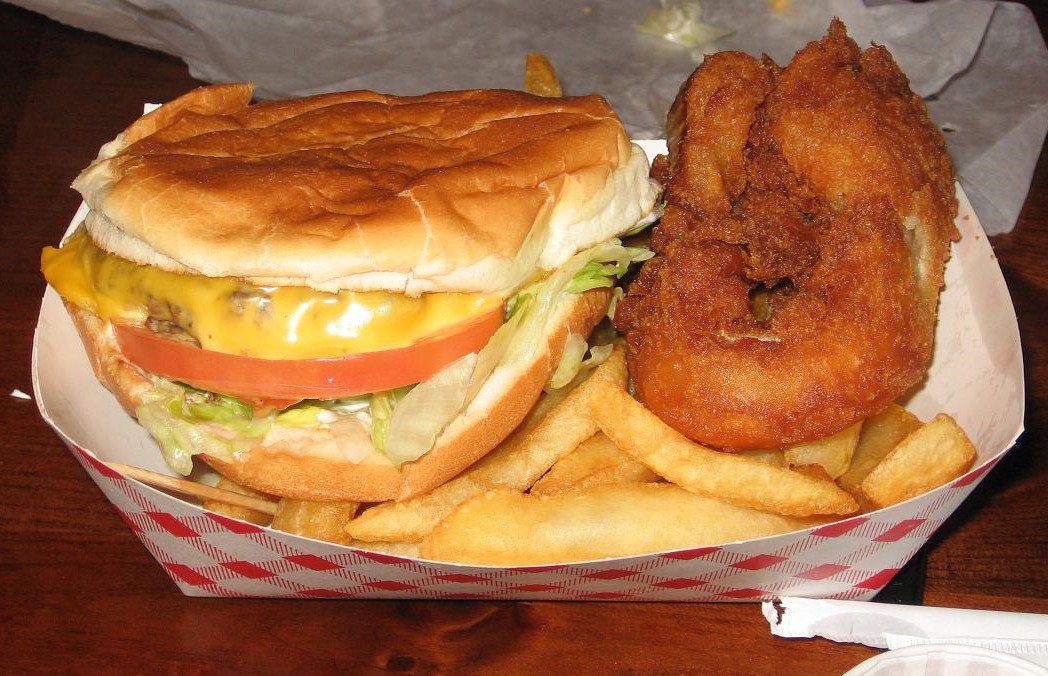
In Search of a Great Cheeseburger


Back when I was in graduate school, I had a friend who seemed to say about virtually every restaurant in town, "Oh, yeah, that place . . . they make a damn good burger." At the time, it irritated me to no end. Of course they make a damn good burger, I always wanted to say but never did. How hard is it to make a good cheeseburger?

Over the years I have changed my outlook. I now believe that it is difficult to make a good cheeseburger. And, it is particularly difficult to find restaurants that make good cheeseburgers. I've eaten a lot of cheeseburgers over the past five years, and in that time I've found only a handful of places abouw which I can say with confidence "they make a damn good burger."

In many ways, what makes a great burger is counterintuitive. Take Sesame, for example, a new restaurant here in Charleston--North Charleston, if you want to be specific. You would think Sesame would be an ideal candidate for cheeseburger greatness. It opened a few months ago in the Park Circle neighborhood--an up and coming but not yet trendy location-- and it's clear that the owners are dedicated to making top-quality, fresh food from scratch. The sweet pickles are homemade. The sweet-potato fries are handcut. The ketchup (yes, the ketchup!) is homemade. They make their own hotdogs! And, most importantly, the beef is ground fresh on the premises.

Since 1994, due to regulations passed in response to a deadly E. coli outbreak at West Coast Jack-in-the-Box restaurants, it has been illegal in South Carolina for a restaurant to serve burgers cooked any less than medium well. A bill has now been introduced to change that, but for now there seems to be one loophole to this law: if you grind the meat in-house you can serve it at whatever temperature your customers request. At present, only a couple of Charleston restaurants fit this bill, including Rue de Jean (downtown) and Poe's (on Sullivan's Island). And, now, Sesame has joined the ranks.

So, it was with great delight that I ordered a medium-rare Carolina burger, which came topped with pimento cheese (homemade, of course). The burger was thick and, because it hadn't been charred to a crisp, very juicy and tender.

But, ultimately, there was something wrong. It was the same reaction I've had in the past to supposedly "gourmet" cheeseburgers. My brain knew this was supposed to be a really great burger, but my palate wasn't buying it.

This isn't a knock on Sesame: it is a great restaurant. I loved the atmosphere. I loved the "blue corn" appetizer (ears of corn soaked in milk, roasted, and topped with grated cheese), which alone are worth going there for. I'm heading back to Sesame for lunch as soon as I can to try one of the homemade hotdogs. But, as much as I admire Sesame's dedication in grinding their own beef and making ketchup from scratch, I just can't put it high in my pantheon of great burgers.

"Gourmet" cheeseburgers tend to be too thick. And, they always seem to come atop a fat, thick bun. And, they have large, thick slices of good cheese on top--or, in the case of the Carolina burger at Sesame, a big pile of pimento cheese made from fresh-grated cheddar and parmesan. Individually, each of these ingredients are excellent. Put together, they don't quite come off.

Maybe it's because you have to work too hard to get it into your mouth, squeezing the bun and stretching your jaws as wide as possible. The cheese never seems to be melted quite all the way through, and toppings are always falling off onto your plate. And, even with the moistness of medium-rare ground beef, such burgers always seem to be too dry--perhaps due to the excessive amount of bun.

In my book, the best cheeseburgers are not the towering concoctions that appear on menus alongside dry-aged steaks and upscale risottos. And, no, they are not ones that seek to amuse or shock by topping a burger with novel ingredients like avocado slices or fried green tomatoes. The best cheeseburger is not about piling together the best ingredients nor the most exotic ingredients: let's face it, we're talking about cheeseburgers here. Instead, it's all about taking rather mundance foods and putting them together in the proper balance.

You need enough of a patty to taste meaty, but not one that's so thick that you have to work to chew it. And the bun should be fairly thin, too, so that you don't have to gnaw through three inches of bread to get to substance. The cheese needs to be melted--very melted--so that it almost fuses with the bun and the patty into a single consistent whole.

My favorite burgers are the 1960s drive-in-style ones. These are usually 1/4 to 1/3 of a pound of meat--half a pound being too thick--and are wide and flat. In almost every case, the places that make my kind of burgers use a sandwich press or a griddle to toast the buns after the burger has been assembled, which guarantees a flat, hot burger with a slightly-toasty top and bottom and tender melted cheese inside.

Maybe this is a matter of upbringing. I grew up in Greenville, South Carolina, which is home to some of the best classic cheeseburger joints in America, all of which for some reason seem to be named Pete's--including Pete's Original on Pendleton Street, Como's Pete's on Augusta Road, Pete's Number 7 on Wade Hampton Boulevard, and Pete's on Poinsette, which is about a mile from my old college apartment and kept me alive for several years of undergraduate study. They all serve great cheeseburgers--and onion rings and milkshakes, too. And the burgers are all wide, flat, and toasted on a press.

Other South Carolina favorites include the Rush's chain in the Columbia area, and the now-departed Shealy's Sandwich Shop, which was a Columbia institution until it closed sometime back around 2000. And Rosewood Dairy Bar and Zesto.

Charleston doesn't seem to have too many places like these. Bessinger's on Highway 17 is perhaps the closest to the ideal. It's a restaurant that features barbecue now, but it was originally a drive-in back in the Golden Age of the Cheeseburger--the 1950s and 1960s--and, at the time, featured its burgers most prominently and barbecue sandwiches as a secondary item. And even though they don't grind their own meat, and the cheese on the top is highly-pasturized yellow American, and the buns are probably from Sunbeam or Merita or some other industrial bakery, their cheeseburgers are hands-down the best in town.

So, if you're going into the restaurant business and are thinking about trying to put out a damn good burger of your own, don't try to simulate "gourmet" qualities by using softball-like beef patties or massive whole grain buns or slices of eggplant on top of the meat.

Keep 'em flat. Keep 'em toasted. And keep 'em coming.

Sunday, June 25, 2006

Carne Seca

I recently visited Tucson, Arizona, determined that in between all the meetings and planning sessions and other work-related chores I would track down and sample carne seca, which, by all accounts, is one of Tucson's unique delicacies.

It turned out to be harder than I expected. My colleagues were all up for a big Mexican meal our first night in town, good Mexican food being something that's hard to come by on the South Carolina coast, so I spent some quality time on the web and came up with a list of likely restaurants near our hotel. And, we seemed in luck: there were at least 3 highly-recommended Mexcian spots only a mile or two away, and all of them offered carne seca on their menus.

A word of warning about Mexican restaurants in Tucson. Most of them--the good ones anyway--are closed on Mondays. We learned this the hard way as we drove to each of the three recommended restaurants in succession and found their parking lots empty and all the lights off. We settled for a touristy-looking Mexican spot that was open but otherwise had nothing going for it. The lackluster menu was devoid of carne seca, and even the margaritas were awful, ruined by the high fructose corn syrup of a bad prepackaged mix.

The next morning, our client asked us, "So, do you like Mexican food? There's a pretty good place just a few blocks from here." I figured my colleagues would lobby for something else, since we'd just had Mexcan the night before, and it was pretty crappy Mexican, at that. So, I jumped in with a loud "yes" before they could say anything. I feared it was going to be another tacos-and-bottled salsa joint. It wasn't. It was really good, starting with the hot, smoky salsa that awaited us on the table. And carne seca featured prominently on the menu.

Carne Seca (literally, "dried beef" in Spanish) is made from strips of flank steak that are marinated in lime juice, dried in the open air, then shredded and browned in vegetable oil along with chiles, onions, and tomatoes. At El Charro, one of Tucson's oldest Mexican restaurants, the marinated beef is placed in wire cages and dried in the sun on the roof of the restaurant (see a photo here).

I'm not sure if sun-on-the-roof is how it is done at Casa Molina, where we ate lunch, but the beef was definitely marinated and dried, and it had a potent effect on the flavor. I ordered a carne seca burrito "enchilada style" (with a savory red chile sauce over the top), and the the filling had a wonderful aged flavor that many would find too strong. Indeed, not knowing exactly what to expect, I was surprised by how pungent the flavor was. After a few bites, though, the strong taste began to grow on me. Halfway through I was absolutely stuffed, but I couldn't stop. I pulled the meat from the second half of the burrito and ate it all.

Surprisingly, in a world teeming with books that trace the historical roots of virtually every obscure dish, and food blogs where tens of thousands of recreational eaters delve into every nook and cranny of food trivial, there seems to be very little written about carne seca apart from a few newspaper reviews of Tucson restaurants. But, I've had it once and I'm hooked. Now I just need an excuse to go back to perform more "research".

Amuse

It's only taken me three months, but I can finally move one of the entries from the "Charleston Restaurants Where I Have Never Eaten But Have Been Meaning To" list to the main list of recommended items.

Friday night my wife and I ate at Amuse, an interesting combination tapas/Italian restaurant in West Ashley. Not surprisingly, considering they serve tapas in a strip mall some 10 miles out from downtown, it wasn't terribly busy on a Friday night. The interior is ordinary--a single large room with a bar along the back right wall--but it is comfortable. All in all, it was a very pleasant evening.

The menu, while not extensive, had sufficient choices that two diners couldn't try everything. Of the six or seven plates we ordered, our favorites were the fried Manchego cheese, a duck confit with dried cherries, little skewers of lamb, and the plate of hams and olives. The sopressata from this latter plate was so rich and tasty that I bought a big chunk the next day at the supermarket to have here at home.

For twenty bucks we got a decent bottle of Spanish tempranillo, which went very well with the food.

One of the best things about the night was the service. Our waiter was personable and helpful, but never overbearing or intrusive, and he made several recommendations for selecting dishes that were right on.

There was one big disappointment, however: they were out of the seared pig trotters. They were the first item that caught my eye when I picked up the menu, and it is my philosophy that if you see something unique on a restaurant menu that you can't order just anywhere you've got to try it. And they were sold out.

So I guess I'll have to go back.

Sunday, June 04, 2006

Market Finds


We hit the Marion Square market yesterday, and I got a pretty good haul: new potatoes and sweet onions from the Green Grocer Farms stand, some intriguing multi-colored carrots from Kennerty farms, along with some fresh snap beans and two handfuls of tiny, bite-sized plums, half of which I ate before leaving the market.

I've got a beef stew underway that will use some of all of these finds, except the plums. It's simmering in the kitchen now and I plan to let it go all day.

Friday, June 02, 2006

Eggs Make It Breakfast


I was traveling this week and had the misfortune of trying to find something to eat for breakfast around 9:00 am in the Phoenix, AZ, airport, which meant lots and lots of food court style chains. I noticed once again something that intrigued me in the past: apparently all you have to do to turn an ordinary crappy fast food lunch item into a crappy fast food breakfast item is add scrambled eggs to it.

Thus, the breakfast burrito, which is pretty much the same as any other burrito (shredded beef, cheese, and salsa wrapped in a tortilla)--except that scrambled eggs are mixed in. And, breakfast pizza, which is just a regular sausage and onion pizza with clumps of scrambled egg added.

I'm not sure what it is about the eggs that make it breakfast, but that seems to be the new rule on the American fast food scene.

The breakfast burrito was okay, by the way--but it would have been better without the egg.

Saturday, May 20, 2006

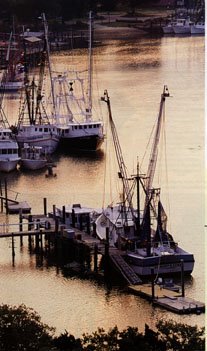
Lowcountry Shrimp Docks


Now that the season is underway, if you want to get the best, freshest local shrimp, cut out the retailers and go straight to the docks where the shrimp is unloaded. The South Carolina Shrimp Marketing Association has a list of Lowcountry docks on their website.

C.A. Magwood's off of Shem Creek is my usual stop, and they are currently selling heads-on white shrimp for $4.00 a pound and heads off for $6.50.

We have a few more weeks left in the white roe shrimp season, then the smaller, sweeter brown shrimp season will take over.

Sunday, May 14, 2006

Sazerac Cocktail


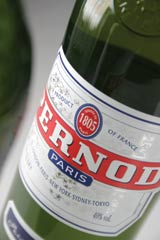
I came across this page searching for drink recipes that use Pernod. A few months ago, when on a kick of buying and trying new types of liquers, I bought a bottle of Pernod. In part this was a little nostalgia for grad school, when a friend of mine served Pernod absinthe-style at a few parties. Though I still think the classic way of serving the liquorice-flavored Pernod (well watered, with a ratio of about 1:5 Pernod to water) makes for a refreshing summer drink, I've been looking for other ways to try it.

I was impressed by the depth of knowledge and research that went into the Sazerac Cocktail page, and it helps that it is a distinctive regional drink. As soon as I get around to acquiring a bottle of rye whiskey I'm going to give this one a try.

Old School Barbecue Sauce--Really Old School


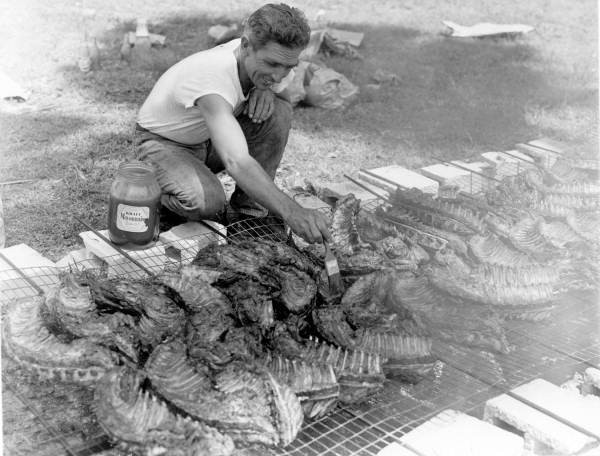
Lex Culinaria's Summer Barbeque Challenge asks bloggers to step outside their comfort zones and come up with interesting barbecue dishes so we all don't have to keep coming back to the same old set of standbys we always use. My approach is not to come up with something new and creative but rather to go old school--really old school--and try the flavor of America's original barbecues. And, a good place to start is with barbecue sauce.

Barbecue fans know that the sauce served with ribs, brisket, and pulled pork varies greatly from one part of the United States to another. The American Barbecue Belt can be divided into distinct “sauce zones” defined by the dominant ingredients in their native concoctions--vinegar-based in North Carolina, mustard-based in central South Carolina, molasses-and-tomato based in Kansas City, etc. Over the past 20 years, the bottled barbecue sauce business--long dominated by a few brands from Kraft and Heinz--has blossomed, and dozens of varieties from many different regions can be found on the typical supermarket shelf. But, as entrenched as these products are in American backyard cooking, barbecue sauce as we know it today is a relatively recent development.

Barbecue originated among the Caribbean and North American Indian tribes before the arrival of Europeans to the New World. British colonists adopted both the word and the cooking technique from the Native Americans, and over time it took on the additional meanings of a dish cooked in such a manner as well as the social event at which the food is served--such as the backyard barbecue.

Americans had been cooking barbecue for more than a century before the first instructions for preparing it began appearing in print. The earliest recipe for pit-cooking barbecue is likely the one in Lettice Bryan’s The Kentucky Housewife (1839), which calls for only the simplest of basting sauces: “nothing but a little salt-water and pepper, merely to season and moisten it a little.” Once the meat was done, Bryan recommended the cook “squeeze over it a little lemon juice, and accompany it with melted butter.”

Three decades later, Mrs. Annabella Hill, from La Grange, GA, published similar directions in Mrs. Hills New Cook Book (1872), though her recipe incorporates butter and a little mustard into the basting liquid: "Melt half a pound of butter; stir into it a large tablespoon of mustard, half a teaspoonful of red pepper, one of black, salt to taste; add vinegar until the sauce has a strong acid taste.” At the end of cooking, “pour over the meat any sauce that remains.”

This basic combination of butter or some other fat, vinegar, and pepper remained the standard barbecue sauce throughout the 19th Century. An 1860 account of a Virginia event described iron vessels positioned along the side of the pit, ”some filled with salt, and water; others with melted butter, lard, etc. into which the attendants dipped linen cloths affixed to the ends of long, flexible wands, and delicately applied them with a certain air of dainty precision to different portions on the roasting meat.” In 1896, Harper’s Weekly described a Georgia barbecue and noted that the meat was cooked for twelve hours and “basted with salt water . . . then, just before it is eaten, plentifully bedabbled with ‘dipney’—a compound of sweet country lard and the strongest vinegar, made thick and hot with red and black pepper.”

Today, eastern barbecue sauces couldn't be more different from their Texas counterparts, but On a Mexican Mustang Through Texas, an 1883 travelogue, described a barbecue outside San Antonio with a sauce almost identical to that used in Virginia and Georgia: “Butter, with a mixture of pepper, salt, and vinegar, is poured on the meat as it is being cooked.” The famed regional variations in barbecue sauces apparently did not develop until the 20th Century.

Early barbecue sauces were simple, prepared in bulk, and used only basic staples for ingredients. One notable feature of the old recipes is that they did not include sugar. That addition began appearing in cookbooks in the 1920s. Around the same time, a variety of other new ingredients began working their way into the sauces, many of them commercially-prepared products such as ketchup and Worcestershire sauce. By World War II, barbecue sauce had evolved from a thin, peppery basting liquid to a sweet, cooked product with a mix of many flavors.

The addition of sugar to barbecue sauce altered its nature, making it thicker and turning it into something that, like ketchup, can be poured directly onto meat in large quantities. Sugar caramelizes and burns when exposed to direct heat, so using such sauces to baste cooking meat can lead to a charred, blackened crust. For this reason, barbecuists typically wait until the end of cooking to pour on the sauces or use a separate low-sugar “mopping sauce” during cooking and save the sweet stuff until serving time.

The addition of sugar to barbecue sauces seems to have changed the way people eat barbecue. Modern sauces are thicker and sweeter than the original varieties, and when slathered on at the end of cooking they can overpower the natural smoked flavor of the meat. As a result, many cooks these days devote less attention to the cooking process because they can just dollop on a lot of flavor at the end. They can now use electric cookers and gas grills to get a crispy grilled crust on the meat and rely on the sauce for the flavor. The addition of liquid wood smoke to barbecue sauces has completed this process. Now, you can pour half a bottle of K.C. Masterpiece over some chicken parts, slap them in a 350 degree over for an hour, and—voila—barbecued chicken!

So, my new approach for the backyard barbecue is to go old school. If you want to get serious about it, you can dig a pit in the ground and burn your own hickory and oak logs down to coals--that's how it was done in the 19th Century. But, you can compromise a little and use charcoal and a modern kettle grill and still get meat that is smoky and flavorful. Here's how I do barbecue chicken the classic way:

1. Build a charcoal fire in your grill (I prefer using a chimney starter). While it's burning, soak 2 handfuls of hickory wood chips in a bowl of water.

2. While the charcoal is burning down, prepare the barbecue sauce Start with about a cup of vinegar (apple cider and/or white) and add in a bunch of salt, black pepper, and red pepper. I don't have any set formula here, but you want to end up with salty, hot vinegar.

3. Take two whole chickens and split them down the middle so you have four chicken halves. Place in a large baking dish and brush them down well with the vinegar sauce, reserving the rest of the sauce for basting during cooking.

4. When the coals have burned down to glowing embers, spread them evenly in the grill.

5. Drain the hickory chips and scatter them across the hot coals. If any of them catch fire and start flaming, give them a minute or two to burn.

6. Place the chicken halves on the grill (inner part downward) and brush with more of the vinegar sauce. Put the lid on the grill and let them smoke.

I wish I could say I had more of a method from here, but essentially I let the chicken smoke undisturbed on the grill as long as I can--at least an hour. Sometime's I'll open the lid and peek in to see how things are going, but usually I try not to disturb it. Sometimes if I open the lid I'll dab on some more of the basting sauce; other times I leave it alone. It always seems to come out just fine. I would recommend piercing the chicken down to the thigh bone before serving, though, to make sure it is cooked through. If the grill has gone cold and you still have red juices, you can finish the cooking in a 350 degree oven.

The key is the hickory chips, which impart the rich, smoky flavor (and that distinctive mahogany smoke ring a quarter of an inch or so into the chicken), and the sauce, which leaves the outer skin salty, spicy, and delicious but doesn't get in the way of the smoky flavor. I have a refrigerator full of various types of bottled barbecue sauces, but my wife and I don't use them at all with this barbecue chicken. The meat itself carries the day.

Sunday, May 07, 2006

Sunflower Cafe


Here's a new one to add to the Dining in Charleston list:

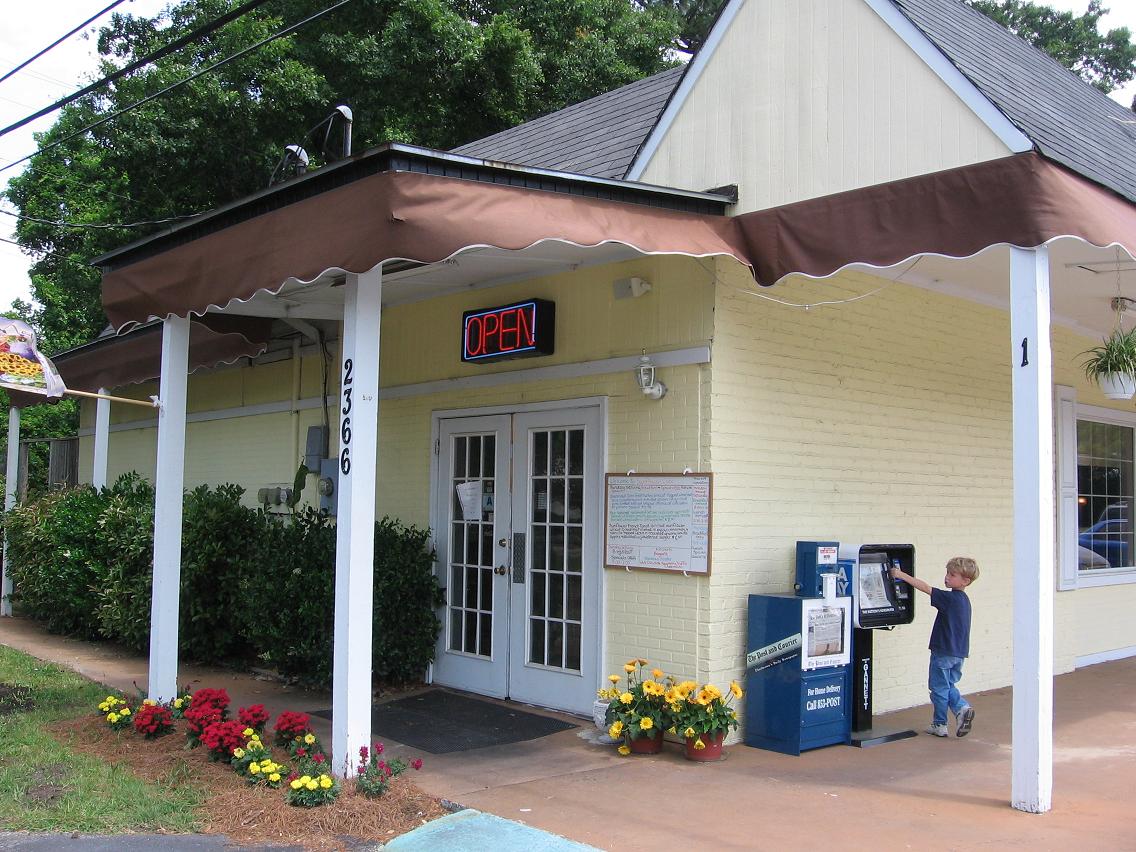
Sunflower Cafe, 2366 Ashley River Road (Highway 61): Don't understimate this small, unassuming looking restaurant tucked away in the corner of an old strip mall off of Ashley River Road. It looks like it would be a standard pancake-breakfast, meat-and-three lunch kind of place. But, the food is really fantastic.


The breakfast menu boasts a series of eggs benedict variations (including country ham and crab), rich omlets, beignets, and french toast. For lunch, there's steak sandwiches made not with some cheap cut but tender filet(!), plus chicken and crabcake croissants, and a range of fresh salads.

The Sunflower is off the beaten path--way down Highway 61 past I-526. But, if you are heading out to Drayton Hall or Middleton Place, drop in and give it a try for breakfast or lunch (they close at 2:30 PM). It's one of my new West Ashley favorites.

Shrimp Season Opens


I was out of town last weekend, visiting my parents, so I missed what is surely one of the most important events of the food season in the Charleston: the Blessing of the Shrimp Fleet in Mount Pleasant, which marks the opening of the state's first shrimp season of the year.

All of the shrimp boats from Shem Creek and surrounding areas gather out in the Charleston harbour, where a blessing is read over loud speakers. The boats then parade northward up the coast of Old Town Mount Pleasant, past Alhambra Hall (a county park), where a crowd gathers to watch the boats sail past and hear descriptions and histories of each boat read over the PA system.

South Carolina has 3 distinct shrimp seasons. The first, "roe shrimp" (which are white shrimp), starts in May or June (depending upon when state biologists determine sufficient eggs have been spawned) and lasts about a month. The haul depends upon how cold previous winter was, with a mild winter meaning more shrimp. A second season starts fast on the heels of the first, this time for brown shrimp, and usually lasts through August. In the fall, the main white shrimp season begins, and it is usually the largest of the three. The shrimp caught during this season are the offspring of the Spring spawn. The white shrimp seaon peaks in September or October and can lasts as long as December.

Local shrimpers are predicting a good catch, though they are hurting economically from high gas prices and competition from oversea shrimp farmers. I'm about to head down to my seafood market and see if they have some fresh white shrimp in yet--it's been a long dry winter living off the frozen stuff.

Popular Posts