Sunday, August 13, 2006

Food Origin Myths


I’ve long been fascinated by food origin myths—particularly the stories of how today’s popular foods came to be. The more you read these types of stories (such as who invented the ice cream sundae), the more you notice some common themes, such as these:

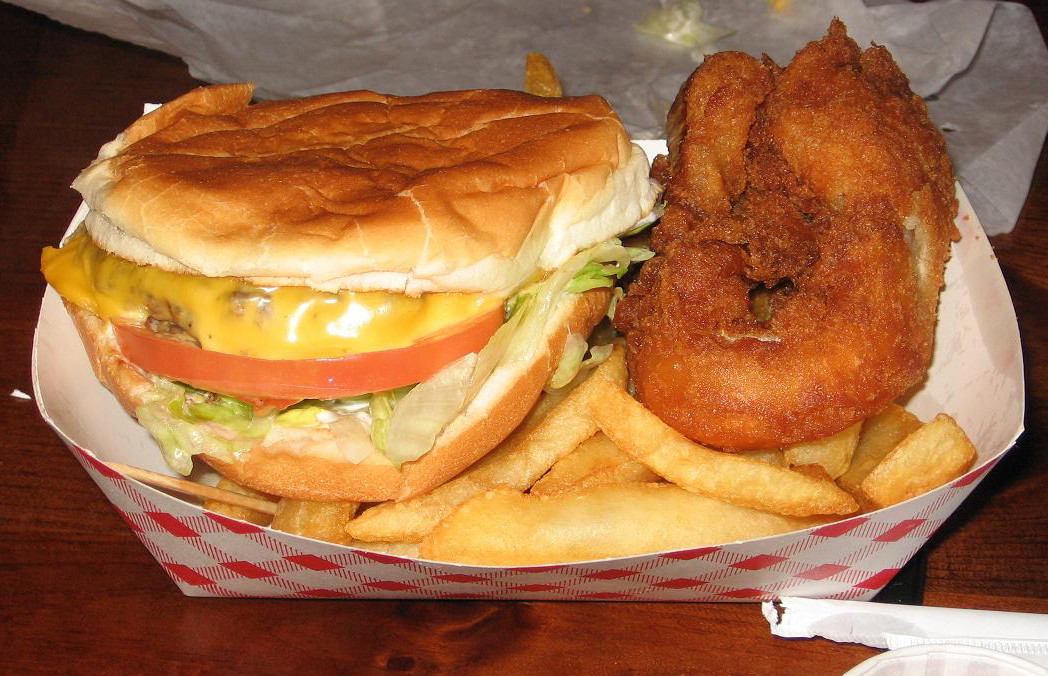
The sole inventor. One common element of food origin stories is that the item in question was fabricated by a single person. Food origin myths speak to the fundamental human need for certainty. It just isn’t satisfying to think that a lot of people were making ground beef patties in the mid-to-late 19th Century, that many of them started serving the patties on various types of bread, including soft white buns (which were becoming more popular after the Civil War), and there were many names for such sandwiches but one of them—hamburger—over the course of decades won out and became an iconic food. It’s much more dramatic to think of a single moment when a single person executed the deed. We prefer the certainty and good stories to the messy, ambiguous facts of history.

The Eureka! Moment and the Last Minute Improvisation. Just as there’s something compelling about the concept of a sole inventor, if the circumstances under which he or she conceives the invention are dramatic, then the story is just that much better. Sir Isaac Newton’s being hit on the head by an apple and coming up with the concept of gravity all at a flash makes for a much better story than his puzzling a theory out over the course of years, informed by lots of reading and discussions with friends and colleagues. The same is true in food origin myths. It’s rare to hear a story about how a cafĂ© owner experimented for years with new sandwich combinations, introducing a long line of duds (smoked salmon, olives, and green beans on toast, anyone?) before finally finding a combination of corned beef and sauerkraut on rye that people seemed to like and ordered again and again.


The Hamburger

The hamburger provides a great example of food origin myths at work, and--in classic food myth fashion--there are many competing stories. Most of them demonstrate the elements of the sole inventor and the last-minute improvisation. These stories can be found in a range of sources, but Linda Stradley's "History of Hamburgers" at What's Cooking America provides a good compilation. A few representative examples:


    Hamburger Charlie: 15-year-old Charlie Nagreen from Seymore, WI, was having little luck selling meatballs from a cart at the 1885 Outagamie County Fair. Deciding that business was slow because it was too hard to eat meatballs while walking around the fair, he had the brainstorm to flatten out the meat and server it between two slices of bread. His creation was an instant hit, and Nagreen returned to the fair to sell them every year until his death in 1951, earning the nickname "Hamburger Charlie".
      The Menches Brothers: Frank and Charles Menches, traveling fair concessionaires from Akron, Ohio, were working the fair at Hamburg, NY, in 1885 when they ran out of pork for their sausage-patty sandwiches. The local butcher had stopped slaughtering pigs because it was too hot, but he offered the brothers ground beef instead, which they substituted in their sandwiches, naming their creation "Hamburgers" after the town.
      Louis Lassen: Louis Lassen, proprietor of a lunch wagon in New Haven, CT, specialized in selling steak sandwiches to local factory workers. One day a customer in a hurry asked for something quick that he could eat on the run, so Louis ground up some scraps of steak and served them between two slices of bread.
    The "hard to carry at a fair" improvisation, interestingly, is similar to the explanation frequently offered for the origin of the hotdog (fair sausage vendor puts his product in a bun to be easier to carry) and the origin of the ice cream cone (ice cream vendor runs out of cups and serves his product in the rolled product from a nearby waffle vendor.)

    In many versions of the Louis Lassen story the explanation is more mundane: Louis was an economical guy and came up with the hamburger as a way to use up leftover steak scraps. This latter story makes much more sense than a last-minute idea for a hurried customer (after all, would a sandwich made from ground meat scraps be any quicker or more portable than a regular steak sandwich?). But, the improvisational details add drama to the story and make it all the more compelling.

    And that's why we love these stories so much.

    Sunday, August 06, 2006

    A Compelling Wild Ride

    Brett over at In Praise of Sardines has kicked off a really interesting series of posts on opening a restaurant in San Francisco. Though I spent many years in my life working in restaurants, I never really saw it much from the business side, so I think this is a great series.

    Sweet Tea the Simple Way


    I'm never sure whether it's worth passing on little tips like this, because once you start using them they seems so obvious. But, for years I was completely unaware of simple syrup, so I can only figure other people must still be, too.

    I've lived in the South all my life, and for all my life I've heard complaints about how once iced tea has been cooled it's impossible to sweeten it. These complaints usually come when I'm traveling in the North with fellow Southerners or here at home when eating at one of those snooty upscale places that have the nerve to say, "we only have unsweet tea." And I'll watch as a dedicated sweet-tea lover dumps packet after packet of sugar into the glass, only to have it sink undissolved to the bottom, leaving a glass of unsweet tea with an inch of sugar sludge at the bottom.

    I gave up on trying to sweeten tea with granulated sugar many years ago and just drink it unsweetened--which is fine with me, since I like both sweet and unsweet tea. But, my openmindedness seems to be uncommon: most people are either dogmatically sweet or unsweet in their preferences and abhor the other kind. This was always a problem when people would drop by my house unexpectedly: I like to offer them something to drink, and most people like iced tea when they're not up for something alcoholic, but my visitors always seem equally split between the sweet and unsweet camps.

    But not long ago, while trying out recipes for various summertime drinks like the mojito, I stumbled across a trick that is perfect for sweetening even the iciest-cold iced tea: simple syrup.

    Simple syrup is just plain old sugar dissolved in a small amount of water. But, for sweetening drinks, it's magic: unlike regular sugar, the syrup blends right in and merges with the cold liquid. You can use it for all sort of alcoholic drinks, too, like margaritas and daiquiris, and stop messing around with those sickly-sweet mixes.

    So, now I always have pitcher of unsweet iced tea in my fridge along with a little container of simple syrup. Pour a splash of syrup in the bottom of a glass, add ice and unsweet tea, and even the most die-hard sweet tea fan will be satisfied.

    Now if we could just get those snooty restaurants to start putting little pitchers of simple syrup on the table . . .


    Simple Syrup

    Use a 1-to-1 ratio of sugar to water. So, to make 2 cups, bring 1 cup of water to a boil and stir in 1 cup of sugar, stirring till the sugar is fully disolved. Cool and store in a closed container in the refrigerator.

    Monday, July 24, 2006

    BAD Food (Airline Edition)


    In BAD: or, the Dumbing of America, Paul Fussell draws a distinction between bad things and BAD things:


    Bad is something like dog-do on the sidewalk, or a failing grade, or a case of scarlet fever--something no one ever said was good. BAD is different. It is something phony, clumsy, witless, untalented, vacant or boring that many Americans can be persuaded is genuine, graceful, bright, or fascinating. . . . Bathroom faucet handles that cut your fingers are bad. If goldplated, they are BAD.

    And, he procedes for some 200 riotous pages to enumerate the many BAD things that can be found in today's culture, from BAD advertising to BAD television.

    I was reminded of his book last week on a flight from Atlanta to San Francisco, during which I was handed ("tossed" might be a better word) my "snack" for the flight, which in today's times of airline belt-tightening is what passes for the inflight meal. Removing the plastic wrapper from the tray revealed a small bag of some sort of highly-spiced cracker-like doodads and a little plastic cup whose foil top read, in big letters, "Havarti". So, basically, cheese-and-crackers, but cheese and crackers that have gone uptown.

    Or so it seemed, until I actually tasted them. The cracker doodles were so awful I could barely swallow one--very, very salty, with an overwhelming layer of powdered artificial flavoring blown onto the exterior. I put them aside, thinking, "at least I can eat the havarti."

    But, upon closer inspection of the fine print on the foil wrapper, I noticed it wasn't Havarti at all. It was "Pasteurized Process Cheese Spread Havarti-type Flavor." The first ingredient in the "havarti" was actually "cheddar cheese". Apparently, to make “Pasturized Process Cheese Spread” with “Havarti-like flavor”, you take plain old cheddar cheese and add to it water, cream, milk, and whey--to make it more fluid, I suppose, and better suited for packaging in a little plastic cup. Then, throw in some unspecified “natural flavor”, salt, and calcium propionate and—pow!—instant class.

    Honestly, what would be so bad about some plain old crackers and cheddar cheese? Saltines would have been just fine—a little boring, maybe, but at least would have been edible. And, the most boring and washed out of supermarket cheddar cheeses would have been better than the so-called Havarti.

    Why pretend that American airline travel is more elegant than it is? As Joe Bob Briggs pointed out in his classic column "Sardine Me!" , we are not willing to pay enough. So how about a good ole pack of Lance crackers instead?

    At least there was Walker's shortbread in the snack pack too--wheat flour, butter, sugar, and salt. It's just as pretentious a thing to serve as the faux Havarti ("Imported from Scotland!"), but at least it tastes good.

    Sunday, July 09, 2006

    Ventilation


    With the arrival of our second son back in March, our family has outgrown our present house, so we've got it on the market and are looking for a new, larger one. My wife has a long list of requirements for the new place--everything from the type of siding to the number of sinks in the master bath--but I have only one: the stove's exhaust fan must ventilate to the outside.

    It doesn't look like we're going to be moving any time soon.

    We've toured close to twenty houses, of varying sizes and styles, though all of them were built in the last 20 years. And, in every single one of them, the hood over the stove does not have a pipe that takes smoke and vapor outside. Instead, they all pass them through a thin, cheapy filter and push the air right back into the kitchen.

    My current kitchen has just such a fan, and it is all but useless. Many of my favorite dishes--like braised meats and pan-seared steaks--involve an initial browning over high heat in order to get a good char on the meat. And this browning puts off a lot of smoke. So, I click the hood fan to high and it's so loud as to drown out conversation, but the smoke that it pulls into the fan is immediately spit right back out into the room, apparently unimpeded by the little charcoal filter inside. My favorite dishes, therefore, are all but guaranteed to fill the the whole house with thick greasy smoke, set off the smoke alarm, and start the baby wailing.

    Perhaps, like flat-top ranges that are easy to clean but terrible to cook with, this is a symptom of how little real cooking most Americans do. Unless you are going to really crank up the stove and try to brown meat--and, honestly, how many people really do that these days?--you'd probably never even notice that the fan is ineffectual. So, why should a builder bother with the slight additional expense of running the pipe to duct the fan outside?

    Because of my lack of effective kitchen ventilation, I've had to put a moratorium on creating one of my all-time favorite dishes, Pollo al Matone, which is Italian for "Chicken-Under-a-Brick" (I always call it the latter, which has such a nice ring to it.) This usually is a grilled chicken dish, in which a whole chicken is roasted over a fire with a big stone pressing down on it to flatten it out and make sure it cooks evenly. I do a modified stove-top and oven version that I borrowed from Mark Bittman's How to Cook Everything and make in a big cast iron pan.

    Chicken Under a Brick

    1 whole chicken
    2 tsp Kosher salt
    1-2 cloves minced garlic
    1 Tbsp minced rosemary
    olive oil

    Preheat oven to 450 degrees

    Prepare the chicken by removing the backbone and splitting it so it will lay flat. To do this, use a sharp knife or kitchen shears to cut along either side of the backbone from front to rear, removing it as a single 1- to 2-inch wide strip. Then, spread the chicken out flat.

    In a small bowl, mix about 1 Tbsp olive oil with the salt, garlic, and rosemary, then rub the mixture all over the chicken--both the skin-side and the inside.

    Heat a large cast iron skillet over medium high heat, pour in about 1 Tbps of olive oil, and add the chicken, skin-side down. Then, weight the chicken so that it is firmly and evenly compressed. I usually cover the chicken with a piece of aluminum foil (just to make clean-up easier), then place a smaller cast iron skillet on top and an antique cast-iron clothes iron that I've found at a flea market and weighs close to ten pounds. You could use a brick or a big rock as well--it just needs to be heavy enough to press the chicken nice and flat.

    Cook on the stove top over medium-high heat for about 10 minutes, then move to the 450-degree oven. Allow it to roast for 15 minutes, then remove the pan, turn the chicken over, replace the weights, and put it back in the oven for another 10 minutes. (This last part can be a bit dangerous. Keep the kids out of the kitchen and use good, thick oven mitts on both hands--all that cast iron will be hot!) Before serving, pierce the thighs with a knife and be sure all the juices run clear. Remove the chicken to a platter, cut into pieces, and serve.

    This requires a little heavy lifting and a lot of greasy smoke from the super-hot pans and oven, but it is very much worth it. The chicken skin will get so delightfully toasted and crispy, and the meat will be the juiciest, most flavorful you will ever have.

    Maybe I'll luck up and find a house with a proper external-ducted range hood. If not, I'll just have to wait till Fall arrives and I can open all the windows and go nuts. Boy, do I ever miss chicken-under-a-brick.

    Wednesday, July 05, 2006

    In Search of a Great Cheeseburger


    Back when I was in graduate school, I had a friend who seemed to say about virtually every restaurant in town, "Oh, yeah, that place . . . they make a damn good burger." At the time, it irritated me to no end. Of course they make a damn good burger, I always wanted to say but never did. How hard is it to make a good cheeseburger?

    Over the years I have changed my outlook. I now believe that it is difficult to make a good cheeseburger. And, it is particularly difficult to find restaurants that make good cheeseburgers. I've eaten a lot of cheeseburgers over the past five years, and in that time I've found only a handful of places abouw which I can say with confidence "they make a damn good burger."

    In many ways, what makes a great burger is counterintuitive. Take Sesame, for example, a new restaurant here in Charleston--North Charleston, if you want to be specific. You would think Sesame would be an ideal candidate for cheeseburger greatness. It opened a few months ago in the Park Circle neighborhood--an up and coming but not yet trendy location-- and it's clear that the owners are dedicated to making top-quality, fresh food from scratch. The sweet pickles are homemade. The sweet-potato fries are handcut. The ketchup (yes, the ketchup!) is homemade. They make their own hotdogs! And, most importantly, the beef is ground fresh on the premises.

    Since 1994, due to regulations passed in response to a deadly E. coli outbreak at West Coast Jack-in-the-Box restaurants, it has been illegal in South Carolina for a restaurant to serve burgers cooked any less than medium well. A bill has now been introduced to change that, but for now there seems to be one loophole to this law: if you grind the meat in-house you can serve it at whatever temperature your customers request. At present, only a couple of Charleston restaurants fit this bill, including Rue de Jean (downtown) and Poe's (on Sullivan's Island). And, now, Sesame has joined the ranks.

    So, it was with great delight that I ordered a medium-rare Carolina burger, which came topped with pimento cheese (homemade, of course). The burger was thick and, because it hadn't been charred to a crisp, very juicy and tender.

    But, ultimately, there was something wrong. It was the same reaction I've had in the past to supposedly "gourmet" cheeseburgers. My brain knew this was supposed to be a really great burger, but my palate wasn't buying it.

    This isn't a knock on Sesame: it is a great restaurant. I loved the atmosphere. I loved the "blue corn" appetizer (ears of corn soaked in milk, roasted, and topped with grated cheese), which alone are worth going there for. I'm heading back to Sesame for lunch as soon as I can to try one of the homemade hotdogs. But, as much as I admire Sesame's dedication in grinding their own beef and making ketchup from scratch, I just can't put it high in my pantheon of great burgers.

    "Gourmet" cheeseburgers tend to be too thick. And, they always seem to come atop a fat, thick bun. And, they have large, thick slices of good cheese on top--or, in the case of the Carolina burger at Sesame, a big pile of pimento cheese made from fresh-grated cheddar and parmesan. Individually, each of these ingredients are excellent. Put together, they don't quite come off.

    Maybe it's because you have to work too hard to get it into your mouth, squeezing the bun and stretching your jaws as wide as possible. The cheese never seems to be melted quite all the way through, and toppings are always falling off onto your plate. And, even with the moistness of medium-rare ground beef, such burgers always seem to be too dry--perhaps due to the excessive amount of bun.

    In my book, the best cheeseburgers are not the towering concoctions that appear on menus alongside dry-aged steaks and upscale risottos. And, no, they are not ones that seek to amuse or shock by topping a burger with novel ingredients like avocado slices or fried green tomatoes. The best cheeseburger is not about piling together the best ingredients nor the most exotic ingredients: let's face it, we're talking about cheeseburgers here. Instead, it's all about taking rather mundance foods and putting them together in the proper balance.

    You need enough of a patty to taste meaty, but not one that's so thick that you have to work to chew it. And the bun should be fairly thin, too, so that you don't have to gnaw through three inches of bread to get to substance. The cheese needs to be melted--very melted--so that it almost fuses with the bun and the patty into a single consistent whole.

    My favorite burgers are the 1960s drive-in-style ones. These are usually 1/4 to 1/3 of a pound of meat--half a pound being too thick--and are wide and flat. In almost every case, the places that make my kind of burgers use a sandwich press or a griddle to toast the buns after the burger has been assembled, which guarantees a flat, hot burger with a slightly-toasty top and bottom and tender melted cheese inside.

    Maybe this is a matter of upbringing. I grew up in Greenville, South Carolina, which is home to some of the best classic cheeseburger joints in America, all of which for some reason seem to be named Pete's--including Pete's Original on Pendleton Street, Como's Pete's on Augusta Road, Pete's Number 7 on Wade Hampton Boulevard, and Pete's on Poinsette, which is about a mile from my old college apartment and kept me alive for several years of undergraduate study. They all serve great cheeseburgers--and onion rings and milkshakes, too. And the burgers are all wide, flat, and toasted on a press.

    Other South Carolina favorites include the Rush's chain in the Columbia area, and the now-departed Shealy's Sandwich Shop, which was a Columbia institution until it closed sometime back around 2000. And Rosewood Dairy Bar and Zesto.

    Charleston doesn't seem to have too many places like these. Bessinger's on Highway 17 is perhaps the closest to the ideal. It's a restaurant that features barbecue now, but it was originally a drive-in back in the Golden Age of the Cheeseburger--the 1950s and 1960s--and, at the time, featured its burgers most prominently and barbecue sandwiches as a secondary item. And even though they don't grind their own meat, and the cheese on the top is highly-pasturized yellow American, and the buns are probably from Sunbeam or Merita or some other industrial bakery, their cheeseburgers are hands-down the best in town.

    So, if you're going into the restaurant business and are thinking about trying to put out a damn good burger of your own, don't try to simulate "gourmet" qualities by using softball-like beef patties or massive whole grain buns or slices of eggplant on top of the meat.

    Keep 'em flat. Keep 'em toasted. And keep 'em coming.

    Sunday, June 25, 2006

    Carne Seca

    I recently visited Tucson, Arizona, determined that in between all the meetings and planning sessions and other work-related chores I would track down and sample carne seca, which, by all accounts, is one of Tucson's unique delicacies.

    It turned out to be harder than I expected. My colleagues were all up for a big Mexican meal our first night in town, good Mexican food being something that's hard to come by on the South Carolina coast, so I spent some quality time on the web and came up with a list of likely restaurants near our hotel. And, we seemed in luck: there were at least 3 highly-recommended Mexcian spots only a mile or two away, and all of them offered carne seca on their menus.

    A word of warning about Mexican restaurants in Tucson. Most of them--the good ones anyway--are closed on Mondays. We learned this the hard way as we drove to each of the three recommended restaurants in succession and found their parking lots empty and all the lights off. We settled for a touristy-looking Mexican spot that was open but otherwise had nothing going for it. The lackluster menu was devoid of carne seca, and even the margaritas were awful, ruined by the high fructose corn syrup of a bad prepackaged mix.

    The next morning, our client asked us, "So, do you like Mexican food? There's a pretty good place just a few blocks from here." I figured my colleagues would lobby for something else, since we'd just had Mexcan the night before, and it was pretty crappy Mexican, at that. So, I jumped in with a loud "yes" before they could say anything. I feared it was going to be another tacos-and-bottled salsa joint. It wasn't. It was really good, starting with the hot, smoky salsa that awaited us on the table. And carne seca featured prominently on the menu.

    Carne Seca (literally, "dried beef" in Spanish) is made from strips of flank steak that are marinated in lime juice, dried in the open air, then shredded and browned in vegetable oil along with chiles, onions, and tomatoes. At El Charro, one of Tucson's oldest Mexican restaurants, the marinated beef is placed in wire cages and dried in the sun on the roof of the restaurant (see a photo here).

    I'm not sure if sun-on-the-roof is how it is done at Casa Molina, where we ate lunch, but the beef was definitely marinated and dried, and it had a potent effect on the flavor. I ordered a carne seca burrito "enchilada style" (with a savory red chile sauce over the top), and the the filling had a wonderful aged flavor that many would find too strong. Indeed, not knowing exactly what to expect, I was surprised by how pungent the flavor was. After a few bites, though, the strong taste began to grow on me. Halfway through I was absolutely stuffed, but I couldn't stop. I pulled the meat from the second half of the burrito and ate it all.

    Surprisingly, in a world teeming with books that trace the historical roots of virtually every obscure dish, and food blogs where tens of thousands of recreational eaters delve into every nook and cranny of food trivial, there seems to be very little written about carne seca apart from a few newspaper reviews of Tucson restaurants. But, I've had it once and I'm hooked. Now I just need an excuse to go back to perform more "research".

    Amuse

    It's only taken me three months, but I can finally move one of the entries from the "Charleston Restaurants Where I Have Never Eaten But Have Been Meaning To" list to the main list of recommended items.

    Friday night my wife and I ate at Amuse, an interesting combination tapas/Italian restaurant in West Ashley. Not surprisingly, considering they serve tapas in a strip mall some 10 miles out from downtown, it wasn't terribly busy on a Friday night. The interior is ordinary--a single large room with a bar along the back right wall--but it is comfortable. All in all, it was a very pleasant evening.

    The menu, while not extensive, had sufficient choices that two diners couldn't try everything. Of the six or seven plates we ordered, our favorites were the fried Manchego cheese, a duck confit with dried cherries, little skewers of lamb, and the plate of hams and olives. The sopressata from this latter plate was so rich and tasty that I bought a big chunk the next day at the supermarket to have here at home.

    For twenty bucks we got a decent bottle of Spanish tempranillo, which went very well with the food.

    One of the best things about the night was the service. Our waiter was personable and helpful, but never overbearing or intrusive, and he made several recommendations for selecting dishes that were right on.

    There was one big disappointment, however: they were out of the seared pig trotters. They were the first item that caught my eye when I picked up the menu, and it is my philosophy that if you see something unique on a restaurant menu that you can't order just anywhere you've got to try it. And they were sold out.

    So I guess I'll have to go back.

    Sunday, June 04, 2006

    Market Finds


    We hit the Marion Square market yesterday, and I got a pretty good haul: new potatoes and sweet onions from the Green Grocer Farms stand, some intriguing multi-colored carrots from Kennerty farms, along with some fresh snap beans and two handfuls of tiny, bite-sized plums, half of which I ate before leaving the market.

    I've got a beef stew underway that will use some of all of these finds, except the plums. It's simmering in the kitchen now and I plan to let it go all day.

    Friday, June 02, 2006

    Eggs Make It Breakfast


    I was traveling this week and had the misfortune of trying to find something to eat for breakfast around 9:00 am in the Phoenix, AZ, airport, which meant lots and lots of food court style chains. I noticed once again something that intrigued me in the past: apparently all you have to do to turn an ordinary crappy fast food lunch item into a crappy fast food breakfast item is add scrambled eggs to it.

    Thus, the breakfast burrito, which is pretty much the same as any other burrito (shredded beef, cheese, and salsa wrapped in a tortilla)--except that scrambled eggs are mixed in. And, breakfast pizza, which is just a regular sausage and onion pizza with clumps of scrambled egg added.

    I'm not sure what it is about the eggs that make it breakfast, but that seems to be the new rule on the American fast food scene.

    The breakfast burrito was okay, by the way--but it would have been better without the egg.

    Popular Posts